

An aesthetic clinic is not a smarter beauty salon. It is a clinical setting, and the difference is medical assessment before anything is done to your skin. That single distinction decides who may treat you, what they may use, and what happens if something does not go to plan.
An aesthetic clinic provides medically supervised, mostly non-surgical treatments that improve the appearance and health of the skin, face, hair and body. Halcyon Medispa is an aesthetic clinic in Marylebone, London, led by Medical Director Dr Osman Bashir Tahir. This guide sets out plainly what happens inside a clinic like this, how it differs from a salon, a medical spa and a wellness centre, who is allowed to carry out which treatments, and how to tell a careful clinic from a careless one.
The short answer: an aesthetic clinic assesses a concern medically, then treats it with injectables, lasers and light based devices, medical grade skin treatments, collagen stimulating treatments, hair restoration or body treatments. Everything begins with a consultation and a medical history, treatment is carried out or overseen by registered medical practitioners, and prescription products are prescribed by someone qualified to prescribe them. A salon cannot do any of that, and a clinic cannot perform surgery.
In this guide:
- What an aesthetic clinic actually is
- Clinic, salon, medical spa and wellness centre compared
- What treatments an aesthetic clinic offers
- Which treatment answers which concern
- Who carries out the treatments
- What happens at a first appointment
- What an aesthetic clinic will not do
- How to choose one in London
- Frequently asked questions
What an aesthetic clinic actually is
The word aesthetic simply means concerned with appearance. An aesthetic clinic is therefore a clinical facility whose purpose is appearance, delivered through medicine rather than cosmetics. In practice that means three things a salon does not have: a medical assessment before treatment, access to prescription medicines and regulated medical devices, and a named practitioner who is accountable for the outcome.
Definition worth remembering: an aesthetic clinic is a medical setting for appearance. The treatments are cosmetic in purpose and medical in nature, which is why consultation, medical history and consent come before anything else.
You will also see the terms medispa, medical spa, aesthetic medicine clinic and skin clinic. They describe overlapping things and none of them is a protected title, so the name tells you very little. What tells you a great deal is who will assess you, who will treat you, and what they are registered to do.
Clinic, salon, medical spa and wellness centre compared
These four are routinely confused, and the confusion is where people get hurt. The table sets out what each is actually for.
| Beauty salon | Aesthetic clinic | Medical spa or medispa | Wellness centre | |
|---|---|---|---|---|
| Main purpose | Grooming, relaxation, surface skincare | Medical treatment of an appearance concern | Clinical treatment in a spa setting | Health, recovery and lifestyle support |
| Assessment first | Usually a patch test only | Medical history, examination, written plan, consent | Medical history where clinical treatments are offered | Health questionnaire, varies widely |
| Who treats you | Beauty therapist | Doctor, nurse, dentist, prescriber or trained practitioner under medical oversight | Mixed, depending on the treatment | Varies, often non medical |
| Injectables | No | Yes, prescribed appropriately | Yes where medically staffed | No |
| Medical lasers and devices | Limited, low energy devices | Yes, regulated medical devices | Yes where medically staffed | Rarely |
| Prescription products | No | Yes | Yes where a prescriber is involved | No |
| Complication cover | Not applicable | Named practitioner, insurance, a plan for when things go wrong | Should be the same as a clinic | Not applicable |
If you want the longer version of the salon comparison specifically, we have a separate piece on the difference between an aesthetic clinic and a beauty salon.
What treatments an aesthetic clinic offers
Treatments group into six families. Almost everything on a clinic menu sits in one of them.
1. Injectable treatments
Muscle relaxing anti-wrinkle injections soften lines caused by movement. Hyaluronic acid fillers restore shape and volume in areas such as the cheeks, lips and the jawline. Collagen stimulating injectables such as Sculptra and Radiesse rebuild support gradually over months, and skin boosters such as Profhilo improve skin quality and hydration rather than shape. If you are weighing up the collagen stimulating route, our guide to how Sculptra works, month by month sets out the timeline, the aftercare and what it will not do.
2. Laser and light based treatments
Medical lasers treat pigmentation, redness, unwanted hair, texture and some vascular concerns. The Aerolase laser and laser hair removal are examples of device led treatments that work at depths a topical product cannot reach. Our guide to what the Aerolase laser treats explains how the device categories differ.
3. Medical grade skin treatments
Chemical peels, microneedling and medical facials such as the HydraFacial work on turnover, congestion and tone. These are the treatments closest to what a salon offers, and the difference is the strength and the assessment behind them.
4. Skin quality and regenerative treatments
Polynucleotides and Profhilo work on the quality of the tissue itself rather than on its shape, which is the right answer when skin looks dull, thin or crepey but the underlying structure is still good.
5. Hair restoration
PRP and exosome therapy treat thinning and shedding, and both are assessed medically first, because hair loss has causes that no injection will fix. See hair loss for the underlying concern.
6. Body treatments
Fat reduction, muscle stimulation and skin tightening devices such as Exion and Endospheres therapy address body concerns non-surgically. They are not weight loss treatments and a good clinic will say so.
The full menu, with what each treatment involves, sits on our treatments pages, and current combinations are listed under packages and offers.
Which treatment answers which concern
Most people arrive with a concern rather than a treatment in mind, which is the right way round. This is roughly how the mapping works.
| What is bothering you | What is usually happening | Where a clinic typically starts |
|---|---|---|
| Lines that appear when you move | Muscle activity creasing the skin | Anti-wrinkle injections |
| A flatter, more tired looking face | Loss of volume and support in the midface | Filler for shape, or a collagen stimulator such as Sculptra for gradual rebuilding |
| Dull, crepey or lax skin | Skin quality and hydration, not shape | Profhilo, polynucleotides, medical facials |
| Congestion and blackheads | Blocked follicles and turnover | Medical facials, peels, professional extraction |
| Pigmentation or uneven tone | Melanin response to sun, hormones or inflammation | Laser and light treatments, targeted pigmentation care, medical grade topicals |
| Thinning hair | Multiple possible causes, medical assessment first | PRP, exosome therapy, referral where needed |
| Redness and reactivity | Vascular and barrier changes | Rosacea and redness care, gentle device treatments |
Who carries out the treatments
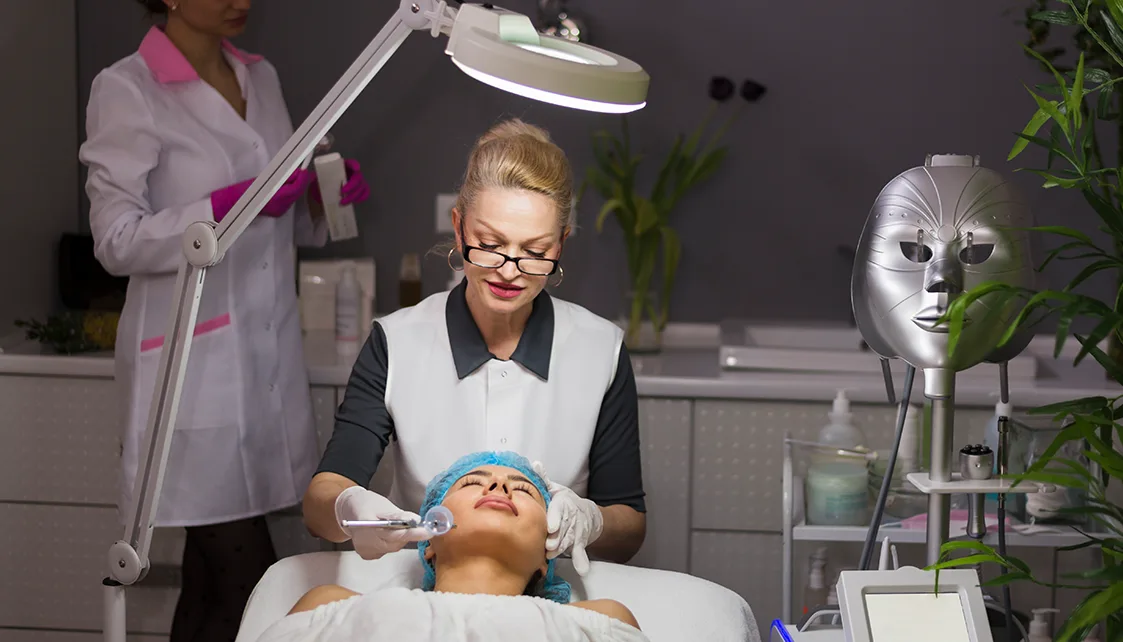
This is the question worth asking before any other. Injectable and prescription treatments should involve a doctor, dentist, nurse or pharmacist prescriber on the appropriate professional register, because the medicines used are prescription only and require a prescriber who has assessed you. Device and laser treatments are commonly carried out by trained aesthetic practitioners working under medical oversight.
You are entitled to ask, before you book, who will treat you, what their professional registration is, and who prescribes anything prescription only. A clinic that answers those three questions easily is telling you something useful. A clinic that finds them awkward is telling you something more useful still.
The treatment is only as safe as the assessment that preceded it, and the assessment is only as good as the person who did it.
What happens at a first appointment
- Medical history. Conditions, medications, allergies, previous treatments and what you use on your skin at home. This is not a formality: it changes what can be offered.
- The concern in your words. What you notice, when you notice it, and what you would like to be different. Being told 'I look tired' is more useful to a practitioner than being asked for a specific syringe.
- Examination. The area is assessed in good light, at rest and in movement, and often photographed as a baseline.
- Options, including doing nothing. Realistic outcomes, alternatives, what each involves, downtime and risks. A plan that starts with the least invasive option that will work is a good sign.
- Consent and cooling off. Written consent after you have had time to consider. For anything significant, a gap between the consultation and the treatment is appropriate.
- Aftercare and review. Written aftercare, a review appointment, and a clear route to contact the clinic if something concerns you.
Our patient journey page sets out how this runs at the Marylebone clinic, and our checklist for a first visit covers the preparation worth doing beforehand.
What an aesthetic clinic will not do
- Surgery. Anything needing an incision, general anaesthetic or a hospital theatre belongs to a surgical specialist.
- Diagnose skin disease in place of dermatology. A changing mole, a persistent rash or a lesion that will not settle needs a medical diagnosis, and a responsible clinic refers rather than treats.
- Promise a result. Faces respond differently. Ranges and likelihoods are fair; guarantees are not.
- Treat you on the day you first enquire, for anything significant. Same day treatment for a first significant procedure removes your time to think.
- Fix what is not a treatment problem. Sleep, sun exposure, smoking and skincare at home change results more than most people expect, and a clinic that never mentions them is skipping half the answer.
How to choose one in London
London has more aesthetic clinics than almost any city in Europe, and quality varies enormously. Six things to check, in order of how much they matter:
- The registration of the person treating you, by name and number, not the clinic's marketing.
- Who prescribes prescription only medicines, and whether that person has assessed you personally.
- Whether the consultation is genuinely an assessment, with the option of being told no.
- What the complication plan is, including out of hours, and whether the clinic can manage a vascular event.
- Whether results shown are the clinic's own patients, with consent, rather than manufacturer images.
- Whether the clinic is somewhere you can go back to. Aftercare and review matter more than the treatment day.
We cover this in more depth in finding a safe and reliable aesthetic clinic in London and choosing a clinic for common skin problems.
Frequently asked questions
What does an aesthetic clinic do?
An aesthetic clinic provides medically supervised, mostly non-surgical treatments that change the appearance and health of skin, face, hair and body. Typical work includes injectable treatments, laser and light based treatments, medical grade facials and peels, skin quality and collagen treatments, hair restoration and body treatments. Assessment and a treatment plan come first, and treatment is carried out or overseen by trained medical practitioners.
What is the meaning of aesthetic clinic?
The word aesthetic here means concerned with appearance. An aesthetic clinic is therefore a clinical setting whose purpose is improving appearance, using medical assessment, medical grade products and regulated devices. The distinguishing feature is the clinical part: consultation, medical history, consent and follow up, not just a treatment on request.
What is the difference between an aesthetic clinic and a beauty salon?
A salon works on the surface of the skin with cosmetic products and relaxation focused treatments. An aesthetic clinic works below the surface with prescription products, injectables and medical devices, and it takes a medical history first because those treatments carry medical risk. The overlap is small: a facial can happen in either, an injectable treatment should only happen in the second.
Is an aesthetic clinic the same as a medical spa?
The terms are used loosely and often interchangeably. In practice, medical spa or medispa usually signals a clinic that combines clinical treatments with a spa style experience and setting. What matters is not the name on the door but who assesses you, who treats you, what their medical registration is, and whether prescription treatments are prescribed by someone qualified to prescribe them.
Do I need a referral to visit an aesthetic clinic?
No. You book a consultation directly. The consultation is an assessment, not a sales appointment: a good clinic will tell you when the treatment you asked for is not the right one, and will sometimes tell you that no treatment is needed at all.
Who carries out treatments in an aesthetic clinic?
It varies by treatment and by clinic. Injectables and prescription treatments should involve a doctor, dentist, nurse or pharmacist prescriber on the appropriate professional register. Laser, light and device treatments are often carried out by trained aesthetic practitioners working under medical oversight. You are entitled to ask who will treat you and what their registration is, before you book.
What treatments can an aesthetic clinic not do?
Surgery. Anything requiring an incision, a general anaesthetic or a hospital setting belongs to a surgical specialist. An aesthetic clinic also cannot promise a result, cannot substitute for dermatology when a lesion or a skin disease needs diagnosis, and should refer you on when what you have is medical rather than cosmetic.
How do I know an aesthetic clinic is safe?
Check that the person treating you is on a recognised professional register and can tell you their registration number. Ask who prescribes any prescription only medicine used. Ask about insurance, about complication management, and about what happens if something goes wrong out of hours. Look for a real consultation with a cooling off period rather than treatment on the same visit as a first enquiry.
What happens at a first aesthetic clinic appointment?
A medical history, a discussion of what is bothering you, an examination of the area, an explanation of the realistic options including doing nothing, a written plan, and consent. Photographs are usually taken as a baseline. Treatment may follow on the same day for simple, low risk procedures, or be booked separately where a cooling off period is appropriate.
How long do results from aesthetic treatments last?
It depends entirely on the treatment. Muscle relaxing injections typically last three to four months. Hyaluronic acid fillers last from six to eighteen months by product and area. Collagen stimulating treatments build over months and can hold for around two years. Skin quality treatments such as peels and medical facials are maintenance treatments, repeated on a cycle.
If you are not sure whether what is bothering you needs a treatment at all, that is a good reason to book a consultation rather than a treatment. A conversation at our Marylebone clinic costs you an hour and often saves a great deal more than that. You can book an appointment online, or look through the treatment pages first.